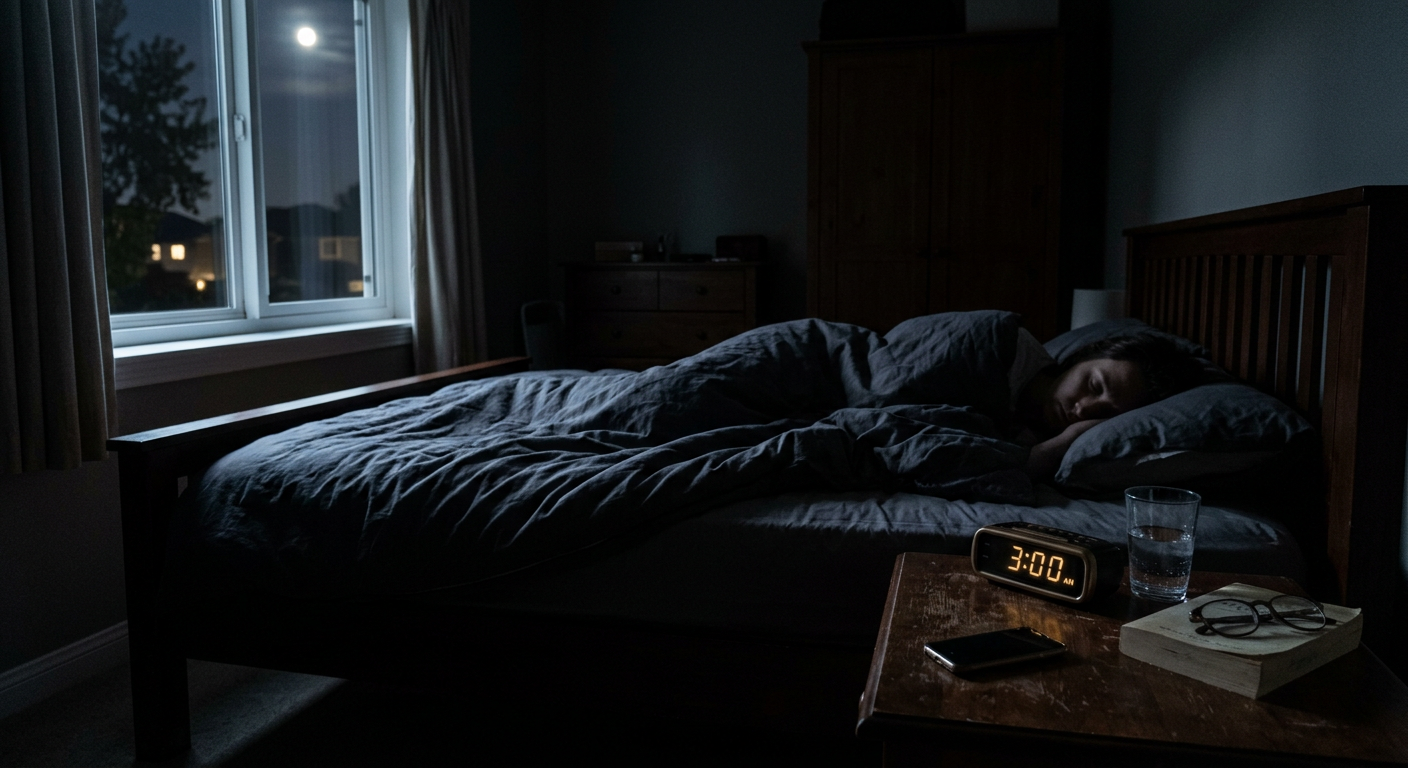
Why Men Over 40 Wake Up at 3am
For about two years, I had the same routine. I'd fall asleep easily around 10:30pm — sometimes helped along by a glass of wine — and then, like clockwork, I'd be wide awake between 2:30 and 3:30 in the morning. Heart rate slightly elevated. Mind racing. Completely unable to get back to sleep for at least an hour.
I blamed stress. I blamed my age. I blamed the blue light from my phone. But when I finally dug into the research, I found the answer was far more specific — and far more common among men over 40 than I'd realized.
The Alcohol-Sleep Connection
Alcohol is a sedative, and it does help you fall asleep faster. That's the part everyone knows. What most people don't know is that alcohol fundamentally disrupts the architecture of your sleep — and the disruption becomes more pronounced as you age.
Here's what happens when you have a drink or two in the evening:
During the first half of the night, alcohol increases slow-wave sleep (deep sleep). You feel like you're sleeping well. But as your body metabolizes the alcohol — typically 3 to 5 hours after your last drink — a rebound effect kicks in.
Your body, having been suppressed by the sedative effects of alcohol, swings in the opposite direction. Your sympathetic nervous system activates. Cortisol and adrenaline levels rise. Your heart rate increases. And you wake up — often between 2 and 4am, depending on when and how much you drank.
Why It's Worse After 40
This rebound effect happens to everyone who drinks, regardless of age. But it hits men over 40 particularly hard for several reasons:
- Slower alcohol metabolism: As I've written about before, your liver processes alcohol more slowly after 40. This means the sedative phase lasts longer, and the rebound hits during a more critical sleep phase.
- Declining testosterone: Testosterone plays a role in sleep regulation. As testosterone declines naturally after 40, sleep quality decreases — and alcohol amplifies this effect.
- Changes in sleep architecture: Even without alcohol, men over 40 spend less time in deep sleep and more time in lighter sleep stages. Add alcohol, and you're compounding an already fragile sleep structure.
- Cortisol dysregulation: Chronic moderate drinking can elevate baseline cortisol levels. When the alcohol rebound adds even more cortisol to the mix, you get that 3am wake-up with the racing heart and anxious thoughts.
The Blood Sugar Factor
There's another mechanism at play that doesn't get enough attention: blood sugar.
Alcohol initially raises blood sugar, then causes it to drop — sometimes significantly — as your liver prioritizes metabolizing the alcohol over maintaining glucose levels. This nocturnal hypoglycemia (low blood sugar during the night) is a well-documented phenomenon, and it triggers the release of stress hormones — including cortisol and adrenaline — that wake you up.
For men over 40 who may already have some degree of insulin resistance (which is extremely common), this blood sugar roller coaster is even more dramatic. You don't need to be diabetic for this to affect you. Even mildly impaired glucose regulation, combined with evening alcohol, can produce that classic 3am wake-up.
What the Research Shows
A 2018 study published in the journal JMIR Mental Health analyzed the sleep data of over 4,000 adults and found that even moderate alcohol consumption (one to two drinks) reduced sleep quality by 24%. Heavy consumption reduced it by nearly 40%.
Another study from the London Sleep Centre found that while alcohol reduced the time it took to fall asleep by about 4 minutes on average, it increased nighttime wakefulness by an average of 15 minutes — and significantly reduced REM sleep, which is critical for cognitive function and emotional regulation.
For men over 40, the numbers are likely worse, though age-stratified data is unfortunately limited. What we do know is that the combination of age-related sleep changes and alcohol creates a compounding effect that's more than the sum of its parts.
My Experiment
When I first learned about this, I was skeptical. I'd been a nightly drinker for so long that the idea of wine being the cause of my sleep problems seemed almost too simple.
So I ran an experiment. For four weeks, I tracked my sleep using a wearable device. During weeks one and three, I drank as usual (typically two glasses of wine with dinner). During weeks two and four, I didn't drink at all.
The results were stark:
- Drinking weeks: Average of 1.8 nighttime wake-ups, with 78% of them occurring between 2:00 and 4:00am. Average heart rate during sleep was 68 bpm.
- Non-drinking weeks: Average of 0.4 nighttime wake-ups. Average heart rate during sleep was 58 bpm. REM sleep increased by 22%.
I won't pretend I was happy about those numbers. I liked my evening wine. But the data was undeniable. The 3am wake-ups weren't stress. They weren't aging. They were a direct, measurable consequence of my drinking.
What You Can Do
If you're experiencing regular middle-of-the-night wake-ups, here are a few things worth trying:
- Track it yourself: Try two weeks on, two weeks off. Use a sleep tracker or even a simple sleep diary. The pattern will become obvious.
- Time your last drink: If you're going to drink, finish at least 3-4 hours before bed. This gives your liver time to metabolize the alcohol before the rebound phase would hit during your sleep.
- Watch the quantity: Even one drink can disrupt sleep in some men over 40. Two drinks almost certainly will.
- Stabilize blood sugar: If you drink in the evening, pair it with protein and healthy fats, not just carbs. This can blunt the blood sugar spike and subsequent crash.
- Get your hormones checked: If sleep problems persist even without alcohol, consider getting your testosterone and cortisol levels tested. Both play significant roles in sleep quality after 40.
The 3am wake-up isn't a mystery. It's a signal. And once you understand what's causing it, you can actually do something about it.